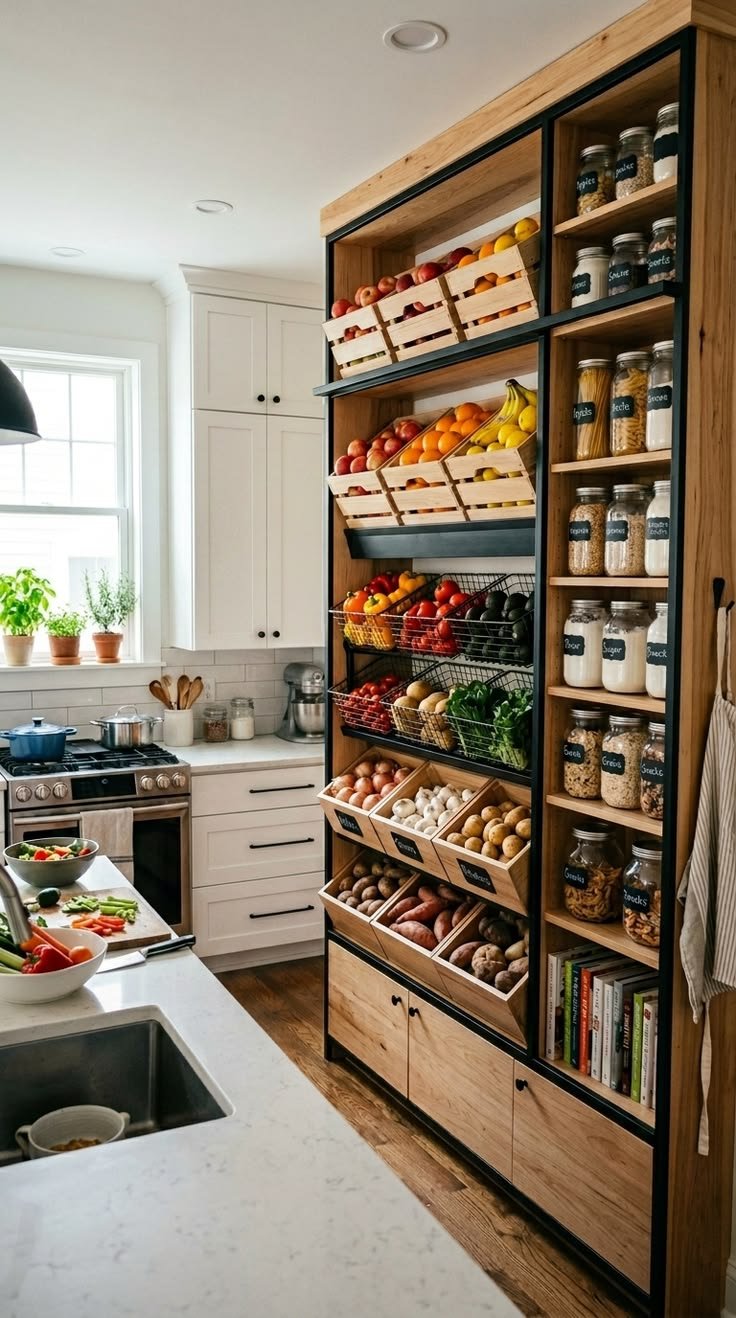
Running out of pantry space is a common problem, especially in small kitchens where every cabinet and shelf needs to work harder. Fruits, vegetables, onions, potatoes, and everyday groceries can quickly take over countertops and fill up valuable pantry shelves.
One clever solution is a produce wall: a dedicated vertical storage area that keeps fresh produce organized, visible, and easy to reach. Instead of using precious cabinet space for everything, you can create an attractive storage zone that makes your kitchen feel more spacious and functional.
What Is a Kitchen Produce Wall?
A produce wall is a vertical storage arrangement designed to hold fruits and vegetables using wall-mounted baskets, open shelves, wooden crates, or tiered organizers.
It can be installed on an unused kitchen wall, beside a pantry, near a refrigerator, or in a convenient corner.
The idea is simple: move suitable produce out of crowded cabinets and onto a dedicated storage wall while keeping everything neatly arranged.
1. Install Wall-Mounted Produce Baskets
Wall-mounted baskets are one of the easiest ways to create a produce wall.
Choose two or three baskets and arrange them vertically to store different types of produce. Wire baskets offer good airflow and make it easy to see what’s inside.
You can use separate baskets for onions, potatoes, garlic, and other produce that is suitable for room-temperature storage.
2. Create a Wooden Produce Shelf
If you prefer a warm, natural look, wooden shelves are a beautiful option.
Install several shelves at different heights and use small baskets or containers to keep produce separated. Natural wood works especially well with white cabinets, neutral walls, and farmhouse-style kitchens.
Make sure the shelves are sturdy enough to support the weight of the items you plan to store.
3. Use Tiered Storage to Save Wall Space
A tiered basket organizer allows you to store several categories of produce in one compact area.
This design is particularly useful for small kitchens because it takes advantage of vertical space instead of spreading groceries across the countertop.
Choose a design with removable baskets so you can easily carry produce to the counter when preparing meals.
4. Add a Dedicated Potato and Onion Station
Potatoes and onions are pantry staples, but storing them together in crowded cabinets can be inconvenient.
Create separate ventilated containers for each. A small wooden storage station with individual compartments can keep them organized while making them easy to access.
Keep potatoes in a cool, dark, well-ventilated place. Store onions separately in a dry, ventilated area.
5. Make Use of an Empty Kitchen Wall
You don’t need a large kitchen to create a produce wall.
Look for unused spaces beside the refrigerator, near the pantry, or along a narrow wall. Even a small vertical arrangement of baskets can provide useful extra storage.
Keep the installation away from direct sunlight, heat sources, and areas exposed to moisture.
6. Combine Open Shelves With Storage Baskets
Combining shelves and baskets gives you flexibility.
Use open shelves for items that need easy access and baskets for smaller produce or kitchen essentials. Wicker baskets create a cozy decorative look, while metal baskets provide a more modern appearance.
Choose containers that are easy to clean and allow suitable airflow.
7. Use a Narrow Rolling Produce Cart
If wall installation isn’t possible, a slim rolling cart can provide a similar storage solution.
Place it beside a cabinet or refrigerator and use its different levels for produce and pantry overflow. The wheels make it easy to move when cleaning or rearranging the kitchen.
Choose a cart with ventilated shelves and enough clearance for the produce you want to store.
8. Label Baskets for Better Organization
Labels make it easier for everyone in the household to find what they need.
You can label baskets with simple categories such as:
-
Potatoes
-
Onions
-
Garlic
-
Apples
-
Citrus fruits
-
Everyday vegetables
Keep the system simple so that putting groceries away becomes quick and easy.
9. Choose a Design That Matches Your Kitchen
A produce wall can become part of your kitchen decor.
For a farmhouse kitchen, choose wooden shelves and natural woven baskets. For a modern kitchen, try black metal baskets and clean-lined shelving. White shelves and light-colored containers work beautifully in bright, minimalist spaces.
The goal is to create storage that looks intentional rather than cluttered.
Tips for Creating a Practical Produce Wall
-
Measure the available wall space before buying organizers.
-
Choose sturdy shelves and secure wall fixings.
-
Use ventilated baskets for suitable produce.
-
Keep potatoes and onions in separate containers.
-
Avoid placing produce near ovens or direct sunlight.
-
Store refrigerated produce in the refrigerator when required.
-
Check stored fruits and vegetables regularly.
-
Remove spoiled produce promptly.
-
Keep frequently used items within easy reach.
-
Avoid overcrowding baskets to allow airflow.
Storage reminder: Not all fruits and vegetables should be stored at room temperature. Some need refrigeration, and certain fruits release ethylene gas that can speed up the ripening of nearby produce. Organize your wall according to the storage needs of each item.
Conclusion
A produce wall is a smart way to solve pantry overflow while making better use of unused kitchen space. With wall-mounted baskets, wooden shelves, tiered organizers, and a few simple storage ideas, you can create a practical area for everyday produce without overcrowding your countertops.
Whether your kitchen is small or spacious, a well-designed produce wall can make grocery storage easier, more attractive, and more organized.